


The IRS Just Changed the Mileage Rate Mid-Year — Here's What Photographers Need to Know
If you drive to shoots, client meetings, or gear pickups — and you're tracking those miles as a business deduction — the IRS just put more money in your pocket.
Effective July 1, 2026, the standard business mileage rate increased from 72.5 cents per mile to 76 cents per mile. The IRS made this change in response to recent increases in fuel prices. The update was announced on July 13, 2026, in IRS Announcement 2026-11 and published in Internal Revenue Bulletin 2026-29.
Here's exactly what changed, how the split-year rate works, and what you need to do to make sure your mileage deduction is accurate.
Why the Rate Changed Mid-Year
The IRS typically sets the standard mileage rate once per year. However, when fuel prices shift significantly, the IRS has the authority to issue a mid-year adjustment. That's exactly what happened here — Announcement 2026-11 revised the rate upward for the second half of 2026 due to recent fuel price increases.
This kind of mid-year change is relatively rare. The last time it happened was 2022. When it does occur, it creates what's called a split-year rate — meaning the rate that applies depends on when the expense was incurred, not the calendar year as a whole.

A driver and videographer ride together in a vintage car while filming on location.
How the Split-Year Rate Works
For 2026, there are two different business mileage rates depending on when the miles were driven:
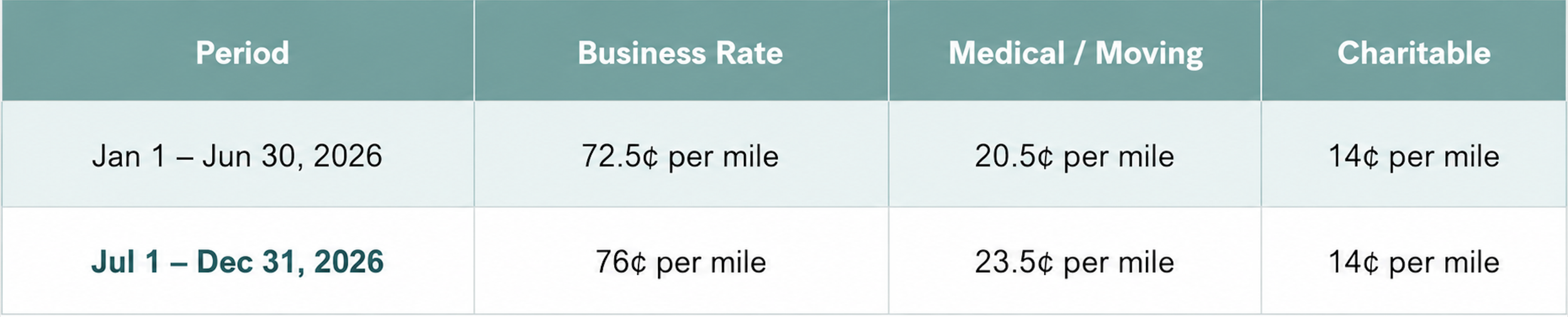
IRS mileage rates for 2026
The charitable mileage rate is fixed by Congress under Internal Revenue Code Section 170(i) at 14 cents per mile and does not change with IRS announcements.
Important: the new 76-cent rate does not apply retroactively to miles driven before July 1. Each half of the year uses its own rate. This is not an average — it is a strict date-based split.
What This Means for Your Photography Business
The rate change is straightforward, but there are a few things worth knowing so you don't leave money on the table or create a bookkeeping headache at year-end.
You're earning more per mile in the second half of the year. Every business mile driven on or after July 1 is worth 3.5 cents more than a mile driven before July 1. On 8,000 miles in H2 2026, that's an extra $280 in deductions — for the exact same driving.
Your mileage log needs a date-based split. Apps like MileIQ and Everlance can export by date range — make sure your records clearly separate miles driven before July 1 from miles on or after July 1. A single year-end total won't work when two different rates apply.
This only applies if you use the standard mileage method. If you deduct actual vehicle expenses instead — gas, insurance, depreciation — this announcement doesn't affect you. — If you are unsure which method you use, your bookkeeper can confirm.
Not sure whether you should use the standard mileage method or actual vehicle expenses? Read our guide: Standard Mileage vs. Actual Expenses for Photographers: Which Deduction Saves You More?
If you reimburse second shooters or assistants for mileage, review your reimbursement policy. The IRS rate increased to 76 cents for qualifying miles driven beginning July 1, but businesses are not required to reimburse at the full IRS rate. Tax treatment can also depend on whether the worker is an employee or an independent contractor. Ask your payroll or tax professional how the reimbursement should be documented and reported.

A videographer films from the passenger seat of a vintage car during a location shoot. Business travel to client sessions may qualify for a mileage deduction when properly documented.
What to Do Right Now
Check that your mileage log app or spreadsheet can show miles by date range — you will need to pull H1 and H2 totals separately.
If you have been tracking total annual miles in one lump sum, ask your bookkeeper to help you break them out by date.
If you reimburse team members for business mileage, review your reimbursement rate and documentation process with your payroll or tax professional.
Confirm with your bookkeeper which deduction method you are using — standard mileage or actual expenses — so the right rate is applied at year-end.
Keep More of What You Earn
Mileage is one of the most overlooked tax deductions for photographers—and small changes like this mid-year IRS update can easily be missed.
At Tidy Books, we help photographers keep accurate books year-round, track deductible expenses correctly, and make sure the numbers your CPA receives are clean and organized. Whether you're trying to stay on top of monthly bookkeeping or get your books caught up before tax season, we're here to help.
Schedule a free consultation to learn how we can simplify your bookkeeping so you can spend less time worrying about your finances and more time behind the camera.
